










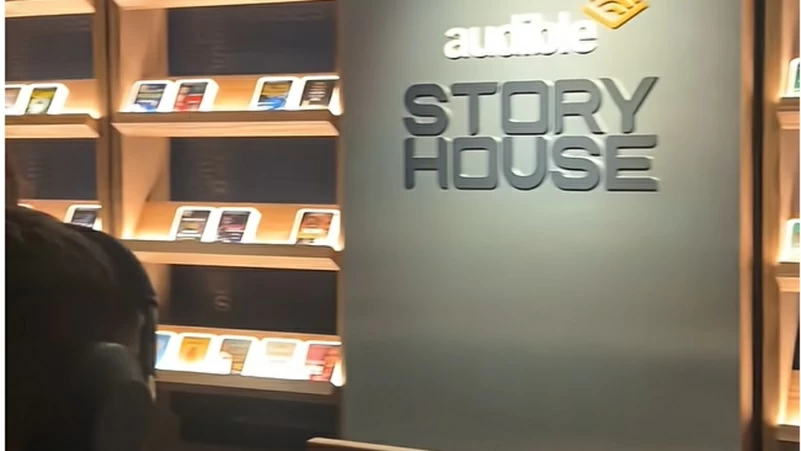
في قلب مدينة نيويورك الصاخب، قررت منصة «أوديبل» التابعة لعملاق التجارة الإلكترونية «أمازون» أن تقلب موازين العالم الثقافي رأساً على عقب. فبدلاً من الرفوف الخشبية المليئة بالكتب، افتتحت الشركة مساحة ثقافية فريدة من نوعها، على هيئة: مكتبة لا تحتوي على ورقة واحدة!
المكان الذي أطلق عليه اسم «أوديبل ستوري هاوس» (Audible Story House) كسر كل القواعد التقليدية. هنا، لا توجد رائحة ورق قديم ولا تقليب للصفحات. والزائر لا يأتي ليقرأ، بل ليغوص في تجربة سمعية خالصة. تخيل أن تدخل إلى مكتبة، وبدلاً من اختيار كتاب، تختار «قصة» تُروى لك بتقنيات صوتية سينمائية تجعلك تعيش الأحداث وكأنك في قلب الفيلم، ولكن عبر أذنيك فقط.
والمثير في هذه التجربة أنها ليست «عزلة فردية» كما قد يظن البعض. فقد خصصت المكتبة غرف استماع جماعية، حيث يمكن للزوار الاستلقاء وتجربة الاستماع القصصي بجودة صوتية فائقة، محولةً عملية القراءة من «نشاط فردي» إلى «حدث اجتماعي جماعي» يربط الناس بالمحتوى وببعضهم البعض.
هل انتهى عصر الكتاب الورقي؟
قد يرى البعض في هذه الخطوة «جنوناً»، لكن الأرقام تتحدث بلغة أخرى. ففي عام 2024، قفزت عائدات الكتب الصوتية في أمريكا لتتجاوز 2.22 مليار دولار. ويعكس هذا الرقم تحولاً جذرياً في عادات استهلاك المحتوى لدى الأجيال الجديدة التي باتت تفضل «الاستماع» أثناء التنقل أو العمل أو حتى الاسترخاء.
ويعترف بوب كاريغان الرئيس التنفيذي لأوديبل بأن الفكرة قد تبدو «غريبة»، لكنه يراهن على أنها المستقبل. وبينما يظل الكتاب الورقي رمزاً عريقاً، تفرض التكنولوجيا واقعاً جديداً يطرح تساؤلاً لا مفر منه: هل ستصبح رفوف المكتبات في المستقبل مجرد قطع أثاث تراثية، بينما نكتفي بوضع السماعات لـ «نقرأ» العالم؟
In the heart of bustling New York City, the Audible platform, part of the e-commerce giant Amazon, decided to turn the cultural world upside down. Instead of wooden shelves filled with books, the company opened a unique cultural space in the form of: a library that contains not a single piece of paper!
The place, named “Audible Story House,” broke all traditional rules. Here, there is no smell of old paper or flipping through pages. Visitors do not come to read, but to dive into a pure auditory experience. Imagine entering a library, and instead of choosing a book, you select a “story” that is narrated to you using cinematic sound techniques that make you live the events as if you are at the heart of the film, but through your ears only.
What’s exciting about this experience is that it is not a “solitary isolation” as some might think. The library has designated group listening rooms, where visitors can lie down and experience storytelling with superior sound quality, transforming the act of reading from a “solo activity” into a “collective social event” that connects people with the content and with each other.
Has the era of the printed book ended?
Some may see this move as “madness,” but the numbers speak a different language. In 2024, audiobook revenues in America jumped to exceed $2.22 billion. This figure reflects a radical shift in content consumption habits among younger generations who now prefer “listening” while commuting, working, or even relaxing.
Bob Carrigan, the CEO of Audible, acknowledges that the idea may seem “strange,” but he bets that it is the future. While the printed book remains a cherished symbol, technology imposes a new reality that raises an unavoidable question: Will library shelves in the future become mere heritage furniture, while we settle for putting on headphones to “read” the world?